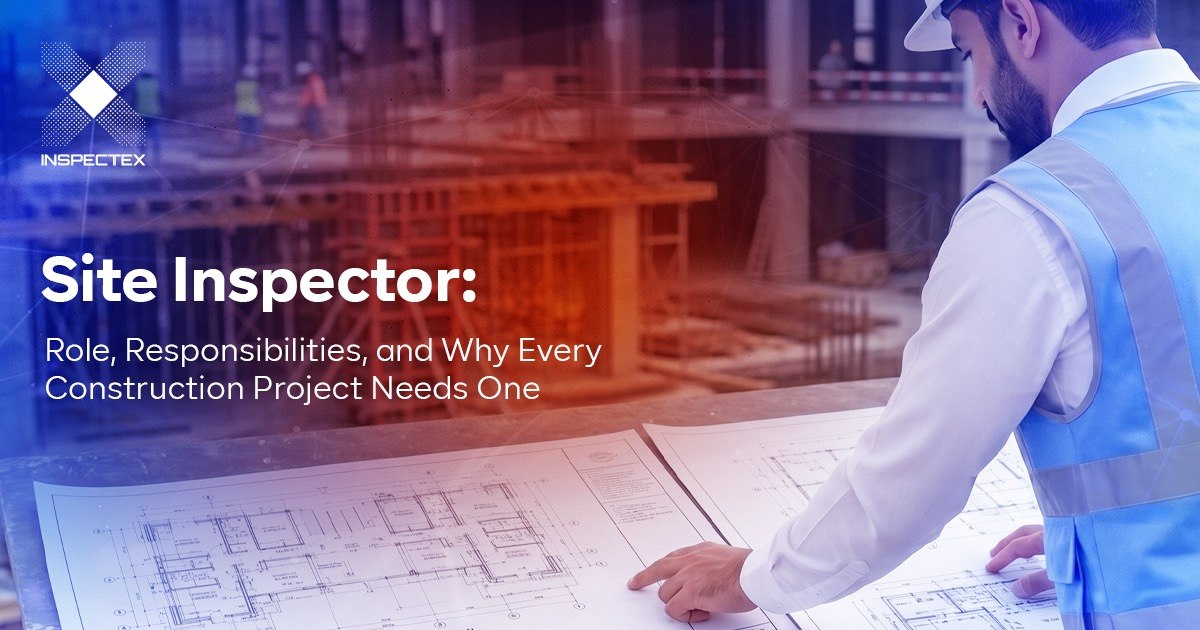
Site Inspector: Role, Responsibilities, and Why Every Construction Project Needs One
 Inspectex Team
كل المقالات
2026-04-29
A building that passes visual approval on-site can still carry hidden defects that cost ten times more to fix after handover than before it. Structural gaps, non-compliant MEP installations, and undetected safety violations rarely announce themselves – they surface later. The professional who prevents that outcome is the site inspector, and understanding exactly what this role covers is the first step toward protecting any construction investment.
This guide covers everything from the daily duties of an on-site inspector to the standards that define a credible construction site inspection process – including what Inspectex delivers for projects in Riyadh and Jeddah.
What Is a Site Inspector and What Does the Role Actually Involve?
Most people assume a site inspector simply walks through a project and checks whether the work looks finished. The actual scope is considerably more technical. A site inspector is a qualified engineer responsible for verifying that every phase of a construction project meets the approved drawings, project specifications, and applicable regulatory codes – covering safety, materials, and workmanship standards throughout.
The role sits at the intersection of technical knowledge and systematic documentation. A civil site inspector, for example, does not just observe – they compare what is built against what was designed, measure tolerances, evaluate materials compliance, and issue formal findings that become part of the project record.
What distinguishes a credible site inspector from a general observer is methodology. Each visit produces a written record. Each deficiency is logged with location, description, photographic evidence, and a recommended corrective action. This creates an audit trail that protects both the client and the project long after construction is complete.
What Are the Core Duties of a Site Inspector on a Construction Project?
Monitoring Work Progress Against Plans and Specifications
Every construction project begins with approved drawings and technical specifications. The on-site inspector’s primary responsibility is verifying that actual work matches these documents at each stage – checking dimensions, materials, construction methods, and sequencing against the approved design.
Deviations from approved plans are documented immediately. Some deviations are acceptable when supported by a formal variation order; others require immediate correction before work proceeds. Nothing is approved through informal communication. Everything goes through documented channels, creating a clear record of every decision made on-site.
This stage is where the majority of structural and material issues are identified before they are embedded in the building fabric and become impossible to address without costly remediation.
Documenting Findings and Issuing Formal Inspection Reports
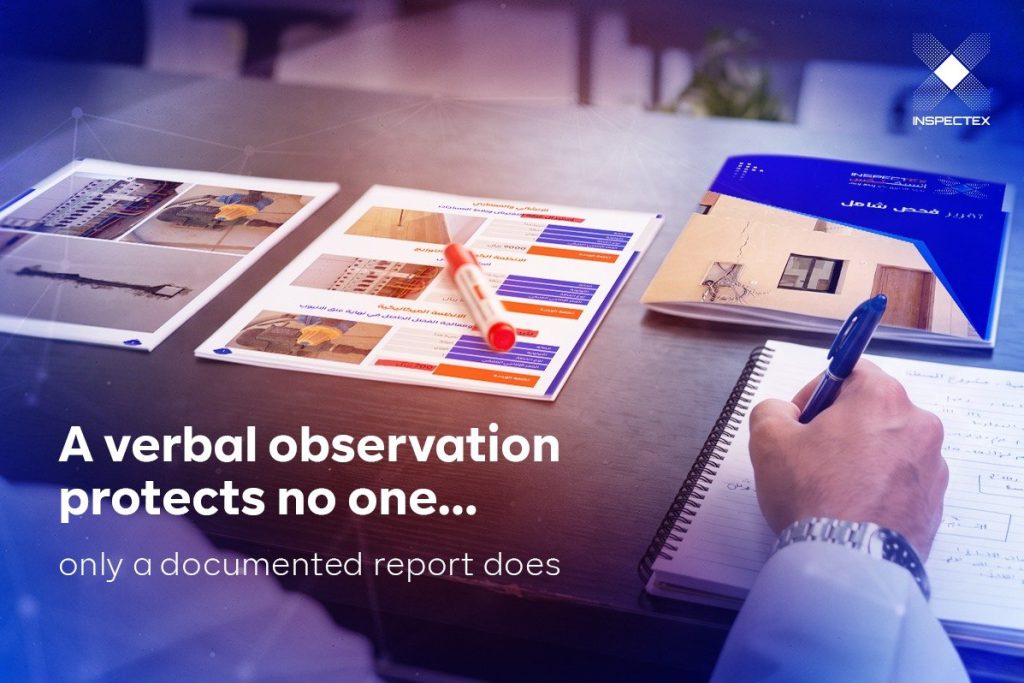
Documentation is what gives construction site inspection its practical and legal value. A verbal observation has no standing when disputes arise. A formal inspection report – structured, dated, signed, and cross-referenced to drawings and specifications – creates the record that protects the project owner.
A competent site inspector produces reports that include photographic evidence, precise location references, severity classifications, and recommended corrective actions. These reports are used to manage project quality, support dispute resolution, and inform the final handover decision.
What Does a Construction Site Inspection Checklist Include?
A construction site inspection checklist is not a generic form. It is a technical document built around the specific scope, phase, and type of project being assessed.
Structural and Civil Works Verification
For structural and civil works, the checklist covers foundation depth and bearing capacity verification, reinforcement placement and cover checks, concrete mix compliance, formwork adequacy, and column and beam dimensional accuracy. The civil site inspector cross-references each item against the approved structural drawings and the relevant provisions of the Saudi Building Code.
Particular attention is given to elements that will be concealed by subsequent construction. Once concrete is poured over reinforcement, or a slab is covered by screed, visual verification is no longer possible. This is why construction site inspection must be sequenced correctly – specific checks are only valid before work proceeds to the next phase.
MEP Systems, Safety Installations, and Materials Compliance
Mechanical, electrical, and plumbing systems require their own dedicated inspection track. This covers pipe routing, electrical conduit installation, earthing systems, HVAC ductwork placement, and fire suppression system integrity. Materials are verified against specifications and tested where required.
For projects where the building inspection scope includes acoustic performance, sound insulation installations are verified at the correct construction stage – not after finishes are applied, when corrections are no longer feasible.
Proper sealing of MEP penetrations through walls and slabs is also verified at this stage. Gaps or poorly executed seals are common sources of latent water leaks that typically emerge post-occupancy, leading to exponentially higher repair costs.
Snag List Preparation and Close-Out Documentation
As the project approaches completion, the site inspector shifts focus to a systematic walkthrough of every space to identify remaining defects, incomplete work, and non-conforming installations. The snag list is a formal document that the contractor must resolve before handover is accepted.
Close-out documentation includes the final inspection report, signed-off snag resolutions, materials certificates, as-built drawing confirmation, and outstanding regulatory approvals. This package forms the complete basis for a formal, protected project handover.
When Does an On-Site Inspector Step In and When Is It Already Too Late?
Timing is one of the most consequential variables in any construction site inspection engagement.
Pre-Construction Phase: Catching Issues Before Ground Breaks
Before physical work begins, a site inspector reviews project documents – drawings, specifications, soil investigation reports, structural calculations, and contractor submittals. This review identifies design conflicts, specification gaps, and compliance issues before they are built into the structure.
A discrepancy in foundation design caught on paper takes hours to resolve. The same discrepancy discovered after excavation can cost weeks of delay and significant additional expense.
During Construction: Continuous Oversight as the Critical Line of Defense
Active construction is where the on-site inspector’s role is most intensive. Regular visits at key milestones – foundation works, structural frame, MEP rough-in, envelope closure, and fit-out – ensure that each phase is verified before the next begins.
This continuous oversight approach is what distinguishes professional construction site inspection from a single walkthrough. Problems caught during construction are resolved with minimal disruption. Problems found after handover require destructive investigation and carry significantly higher repair costs. This is particularly true for issues such as wall mold, which frequently traces back to MEP or envelope failures present during construction but undetected until moisture damage becomes visible.
Project Close-Out: Final Walkthrough and Handover Readiness
The final phase involves a comprehensive close-out inspection covering every space, installation, and finishing element against the project specifications and the previously issued snag list. Each outstanding item is verified as resolved and formally documented before the project is cleared for handover.
What Qualifications and Standards Should a Licensed Site Inspector Hold?
A site inspector working on construction projects in Saudi Arabia should hold an engineering degree in a relevant discipline – civil, mechanical, or electrical – combined with field experience and working knowledge of the Saudi Building Code.
Certifications in inspection methodology and quality management add credibility and ensure work is conducted systematically. Reports produced by a qualified site inspector should meet the documentation requirements of the applicable SBC inspection framework to carry weight in formal reviews or regulatory submissions. Reports that do not meet these standards offer limited protection in disputes or warranty claims.
Inspectex On-Site Inspection Services – Certified Engineering Teams Across Saudi Arabia
Inspectex provides professional construction site inspection services for residential, commercial, and mixed-use projects in Riyadh and Jeddah.
How Inspectex Delivers Construction Site Inspection from Foundation to Handover
Each engagement begins with a document review before the first field visit. On-site work is conducted using advanced equipment and non-destructive testing methods, with findings documented systematically – photographic evidence, precise location mapping, and technical assessments referenced against approved project documents and applicable SBC provisions.
The inspection methodology covers every space individually: room by room and zone by zone. No area is assessed by proximity to another.
The Three-Engineer Model: Civil, Electrical, and Mechanical Working as One Team
For comprehensive construction site inspection, Inspectex deploys three field engineers simultaneously – one civil/structural, one electrical, and one mechanical. Each specialist covers their own discipline in full, producing a complete compliance picture rather than a single-discipline review.
This reflects a practical reality: structural, electrical, and MEP issues rarely occur in isolation. A wall with a waterproofing problem may also have incorrectly routed conduits. A slab deviation may have affected MEP penetrations in the zone above it. A team model catches these interactions; a single inspector working alone cannot.
Following field work, findings are reviewed by a separate analysis team, a recommendations team, and a technical director who approves the final report before delivery. This multi-stage internal review eliminates individual oversight errors and ensures every report meets the required standard.
SBC INSP 0009 Certified Reports That Protect Your Project in Riyadh and Jeddah
Inspectex reports are structured in accordance with SBC INSP 0009 requirements. Each report includes a quantified assessment of identified deficiencies, a cost estimate for recommended remediation, and explicit references to the applicable Saudi Building Code provisions.
Reports are archived for a minimum of 10 years, providing a long-term technical record that remains accessible for warranty claims, regulatory inquiries, and future transaction due diligence.
Frequently Asked Questions About Site Inspection
What Is the Role of a Site Inspector?
A site inspector verifies that construction work complies with approved drawings, project specifications, and applicable building codes. The role focuses on workmanship monitoring, materials verification, and formal documentation of technical findings at each construction phase.
What Are the Duties of an Inspector?
Core duties include reviewing project documents before site visits, conducting structured inspections at defined milestones, logging deficiencies with photographic evidence, issuing formal reports, and confirming that corrective actions are completed before subsequent work proceeds.
What Is Site Inspection?
Site inspection is a structured technical process in which a qualified engineer evaluates whether ongoing or completed work meets required engineering standards – covering design compliance, material quality, and overall regulatory requirements.
Need a Qualified Site Inspector for Your Next Project? Inspectex Is Ready
The difference between a defect caught during construction and one that surfaces three years after handover almost always comes down to the quality of oversight that was in place during the build.
Inspectex provides certified construction site inspection services across Riyadh and Jeddah – multi-discipline engineering teams, advanced non-destructive testing equipment, and SBC INSP 0009-compliant reports. Whether the project is at the foundation stage, mid-construction, or approaching close-out, Inspectex deploys the right expertise at the right phase.
Contact Inspectex today to schedule your site inspection.
