Building Inspection in Saudi Arabia: The Complete Guide Before Purchase or Handover in 2026
 Inspectex Team
كل المقالات
2026-03-31
Every property has two versions. The version you can see is what sellers present. The version you cannot see is what you are actually buying, hidden deeply behind walls and beneath floors.
Building inspection is the professional mechanism bridging that gap, providing verified technical evidence of a property’s real condition before any commitment. In the Saudi Arabian real estate market, independent technical evaluation is a standard professional practice designed to secure your investment.
Inspectex prepared this guide to explain how it works, what it covers, and what to expect in 2026.
What Is Building Inspection?
Understanding the true condition of a property requires moving beyond surface aesthetics to evaluate the core engineering reality.
Defining Building Inspection and Its Core Objectives
Building inspection is a systematic technical evaluation of a property’s physical condition conducted by qualified engineers. Its core objective is to identify defects, deviations from approved construction standards, and latent risks not apparent from a standard viewing.
A professional building inspection systematically examines the following core components:
- The structural frame and building envelope.
- Mechanical and electrical systems.
- The concealed plumbing network.
- Thermal layers, waterproofing, and surface finishes.
The output is a detailed engineering report classifying findings by severity and providing actionable remediation recommendations. A valuation determines market value, while an inspection determines physical condition. Both tools work together to reveal exactly what you are buying.
The Importance of Independent Third-Party Inspection
In Saudi Arabia, building inspection refers specifically to an independent technical assessment conducted by a third party with no financial interest in the transaction. This objective engineering evaluation is commissioned exclusively to serve the property buyer or owner.
The Saudi Building Code establishes the technical standards against which findings are measured, giving the assessment a solid regulatory basis rather than relying solely on individual inspector judgment.
Types of Building Inspection Based on Property Condition
The engineering approach must adapt to the lifecycle stage and operational purpose of the assessed property.
New Build vs. Ready Property Inspections
- New Build Inspections: Occur before or during handover. The primary focus is on construction quality, verifying whether the work follows approved drawings and materials meet specifications. Defects here are often concealed by fresh finishes, like waterproofing failures hidden under new tiles.
- Ready Property Inspections: Cover occupied properties, adding a second layer of assessment focusing on system condition relative to age and occupancy impact. An occupied building may have unauthorized modifications or deferred maintenance.
Residential vs. Commercial Building Inspection
- Residential Inspection: Covers villas, apartments, and compound units. Main focus areas include habitability, structural safety, system functionality, and construction quality.
- Commercial Inspection: Covers offices, retail units, and warehouses. The extended scope evaluates fire safety systems, HVAC performance, load-bearing capacity, and compliance with occupancy regulations.
Structural Condition Assessment for Aged Buildings
Buildings older than fifteen years require particular attention to structural condition. Thermal cycling and humidity fluctuation can produce concrete deterioration measurable only with appropriate engineering equipment.
A structural condition assessment for aged buildings uses advanced chemical penetration analysis and electromagnetic surveys for corrosion risk to estimate in-situ concrete strength, providing a quantified, scientific picture of structural health.
Why Building Inspection Is Critical Before Purchase
Making a real estate investment without technical validation exposes buyers to severe financial risks.
Uncovering Hidden Structural Defects
The most consequential building defects are invisible at the point of purchase. Waterproofing failures, reinforcement corrosion, and installation errors in concealed systems develop progressively and become apparent only once damage is advanced.
A pre-purchase building inspection uses thermal scanning and precision moisture sensing to reach behind finished surfaces. This advanced capability to measure the property accurately separates a professional engineering inspection from a standard visual inspection.
Validating Construction Quality Before You Invest
The Saudi Arabian construction market includes a wide range of building quality. Premium paint finishes can easily coexist with improperly compacted concrete and undersized electrical distribution boards.
Pre-purchase technical due diligence provides independent validation of construction quality against measurable standards. Buyers gain objective evidence to support their investment decision rather than relying solely on developer marketing.
Protecting Buyers and Investors from Future Liabilities
Once a property transfer is completed, the buyer assumes full responsibility for its condition. A pre-purchase condition survey creates a documented baseline of the property’s condition at transfer, protecting the buyer in subsequent disputes about when a specific defect originated.
Pre-Handover Inspection for Newly Completed Properties
Handover is the absolute most critical window of opportunity to enforce developer accountability before you sign away your rights.
At handover, the developer’s contractual obligation to rectify defects is still active. A pre-handover inspection identifies snag items and hidden defects before the buyer signs the completion certificate. Items discovered six months later require the buyer to demonstrate that the defect existed before handover, which is a significantly harder position to sustain without a documented engineering report.
Core Responsibilities of a Building Inspector
A multi-disciplinary team of qualified engineers acts as a technical auditor, systematically testing physical structures against established safety codes.
Inspection, Testing, and Technical Evaluation
A professional building inspection systematically conducts the following:
- Physical assessment of accessible structural elements.
- Testing of mechanical and electrical systems.
- Evaluation of concealed plumbing networks for leaks.
- Assessment of waterproofing integrity.
Where systems are inaccessible, the inspection team documents the limitation and recommends further targeted investigation. The engineering survey functions as a detailed condition assessment, classifying findings across a severity spectrum, allowing the client to prioritize and accurately cost their response.
Documentation and Findings Analysis
Every finding must be rigorously documented with:
- Photographic evidence.
- Instrument readings.
- Precise location references.
The findings are then analyzed in context. Professional building inspection services produce comprehensive reports that chain evidence to conclusions transparently.
Tools and Technology Used in Building Inspection
Modern property assessment relies entirely on sophisticated sensing technology to uncover hidden defects accurately without causing damage.
Specialist Equipment for Accurate Assessment
Professional building inspection uses a defined engineering toolkit. Field engineers utilize:
- Specialized thermal scanning equipment to identify moisture pathways.
- Highly calibrated sensing tools to quantify water content at depth.
- Specialized electrical testing units to verify circuit integrity and earth continuity against code requirements.
Inspectex maintains strict calibration records for all field equipment, ensuring that every reading is defensible and consistent for our clients.
The Role of Non-Destructive Testing (NDT)
Non-destructive testing allows engineers to assess building components without causing physical damage to the finishes. Advanced methods include:
- Surface evaluations to estimate concrete hardness.
- Electrochemical mapping to assess active corrosion probability.
Building Inspection Process Step-by-Step
A rigorous engineering assessment follows a strict sequential protocol to ensure no hidden defect goes unnoticed.
Site and Architectural Assessment
The inspection process begins with reviewing available documentation, including approved architectural drawings and mechanical layouts. On-site, the architectural finishes and physical components are meticulously assessed by our specialized engineers through:
- Evaluating the condition, alignment, and operational quality of all doors and windows to ensure proper sealing and functionality.
- Inspecting floors and ceilings for execution defects, leveling issues, and material degradation.
- Assessing the overall interior finishes and building envelope for construction quality and strict compliance with approved standards.
Testing Mechanical and Electrical Systems
Moving beyond the structural frame, our specialized engineering team evaluates the core operational systems:
- Electrical Safety: The electrical distribution system is rigorously tested by our specialized electrical engineer for correct installation, load balancing, and safe earthing.
- Mechanical and Plumbing Networks: The concealed plumbing network is assessed by our specialized mechanical engineer for pressure integrity and evidence of historic or active leaks, alongside evaluating the operational condition of the property’s overall mechanical systems.
Delivering the Technical Inspection Report
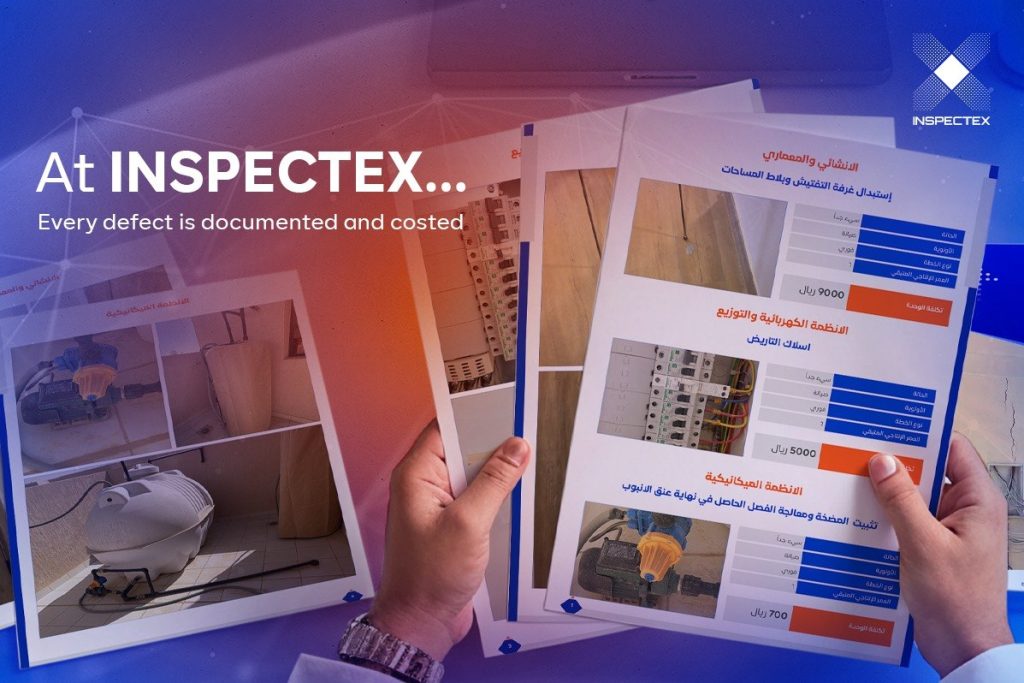
At Inspectex, the field data gathered by our multi-disciplinary team of 3 specialized engineers undergoes a rigorous multi-stage internal review process. The report is not sent directly from the field; it is formally drafted, reviewed, and given final approval by a senior technical director before being delivered within 3 to 7 days.
Every finding is systematically documented, classified by severity, and accompanied by a recommended remedial action and an approximate cost estimate based on current Saudi market rates.
Findings Review and Final Recommendations
Our commitment does not end with the report delivery.
Inspectex engineers are fully available to discuss findings with the client, explain complex technical conclusions, and provide the supporting engineering evidence needed for remediation requests during property negotiations.
Pre-Purchase Building Inspection Guide
Executing technical due diligence at the right moment provides maximum leverage during your real estate negotiations.
When Do You Need a Professional Building Inspection?
Timing your technical assessment correctly is the deciding factor in successfully transferring repair liabilities.
- Before Purchase or Final Handover: The optimal timing is before any irreversible commitment is made, specifically before signing the handover certificate or completing a purchase transaction. Technical findings can still influence the outcome at this stage.
- When Cracks, Dampness, or Insulation Issues Appear: When a building shows sudden signs of distress like recurring damp patches or unusual energy consumption, a building inspection is the appropriate first response to establish the root cause before commissioning random repairs.
- After a Major Disaster or Renovation Works: Buildings experiencing flooding, fire, or significant structural alteration must be inspected to confirm core integrity and ensure no pre-existing conditions were dangerously disturbed.
Key Focus Areas During a Ready Property Inspection
For ready properties, the inspection strictly prioritizes systems that are exceptionally costly to repair. The assessment focuses heavily on identifying risks that frequently produce massive post-purchase financial burdens, such as:
- Structural integrity and concrete health.
- Waterproofing condition and membrane failures.
- Hidden plumbing leak status.
- Electrical system safety and code compliance.
What a Pre-Purchase Inspection Report Covers
A professionally prepared engineering report translates technical data into an actionable investment tool. It systematically:
- Documents the current physical condition of all inspected systems.
- Classifies findings by severity and risk level.
- Identifies safety hazards requiring immediate attention.
- Provides approximate cost estimates for necessary remedial works.
- Establishes a documented, legally defensible baseline condition for the property.
Cost of Building Inspection in Saudi Arabia
The financial investment required for an engineering assessment provides an exponential return by preventing massive future repair bills.
Factors That Determine the Price of an Inspection
Building inspection pricing reflects the precise scope of work required to accurately assess the property. Key factors include:
- Property size and total built-up area.
- System complexity and the number of operational utilities.
- The age of the building and its overall structural condition.
- Whether advanced, specialized non-destructive testing (NDT) methods are necessary.
Comprehensive vs. Visual Inspection: Cost vs. Value
A visual inspection covering only visible elements naturally costs less upfront. However, the true value of a comprehensive inspection is best measured against the massive financial burden of the hidden structural defects it prevents from becoming the buyer’s liability.
ROI for Property Developers and Facility Managers
- For Developers: A pre-handover building inspection protects warranty reputations and minimizes post-sale disputes.
- For Facility Managers: Periodic building inspection services identify maintenance priorities before they escalate into systemic failures, significantly extending the asset’s service life.
How to Choose a Professional Building Inspection Company
Selecting the right engineering partner guarantees your assessment is rooted in measurable scientific fact rather than subjective opinion.
Verifying Credentials and Licensing
A credible building inspection company must be officially licensed by SASO and fully accredited by SAAC. Furthermore, it exclusively employs qualified engineers formally registered with the Saudi Council of Engineers (SCE) and deeply familiar with the Saudi Building Code (SBC) requirements.
Reviewing Sample Reports Before Committing
Always review a sample report from the provider before commissioning the service. A professional engineering report must:
- Chain photographic evidence directly to written findings.
- Classify defects clearly by severity.
- Provide approximate, costed recommendations for remediation.
Agreeing on Scope and Methodology in Advance
At Inspectex, we adhere to a strict, documented methodology. Our specialized team conducts a meticulous room-by-room and space-by-space assessment of the entire property, including concealed areas, to guarantee maximum technical depth and ensure no latent defect is overlooked.
Frequently Asked Questions About Building Inspection
Quick, engineering-backed answers to the most common technical questions regarding property assessment.
What is the biggest red flag in a building inspection?
Active structural cracking combined with moisture ingress represents a severe risk, indicating reinforcement corrosion in progress, which is exceptionally costly to remediate.
Is the inspection carried out without demolition?
Yes. Professional building inspection relies entirely on non-destructive methods. If a concealed defect cannot be definitively confirmed, the engineering team strictly documents the finding and recommends targeted investigation.
How long does a full building inspection take?
The on-site assessment depends on the property size; a standard apartment typically takes around 3 hours, while a residential villa requires additional hours for a comprehensive check. Following the field visit, report preparation, multi-stage internal review, and final director approval take an additional 3 to 7 days.
Book a Building Inspection with Inspectex
Don’t leave your property acquisition to chance. Inspectex provides specialized building inspection services in Riyadh and Jeddah, deploying a dedicated team of 3 specialized engineers (Civil, Electrical, and Mechanical) to ensure accurate, non-destructive diagnostics.
Contact Inspectex today to secure your property with undeniable engineering facts.
