Tank Leak Detection: Causes, Methods, and Definitive Solutions for 2026
 Inspectex Team
كل المقالات
2026-04-04
A silent water leak from your underground tank isn’t just wasting water; it’s actively eroding your property’s foundation. In a market where hidden structural defects can cost tens of thousands of riyals, relying on surface-level visual checks is a high-stakes gamble with your family’s safety. To eliminate this uncertainty, Inspectex provides the definitive engineering criteria for evaluating properties according to the Saudi Building Code (SBC), ensuring your investment is backed by undeniable technical facts.
The Engineering Reality of Tank Leak Detection
To fully appreciate the immense value of an engineering audit, it is crucial to define it through a strictly technical lens. A specialized tank leak detection protocol is an exhaustive, non-destructive audit performed to identify concealed water escapes before they compromise the building’s structural integrity.
Defining Tank Leaks and Their Types
An engineering assessment categorizes water escapes into two primary types:
- Internal Leaks: Occurring within the tank’s body, where water escapes into the surrounding soil or building structure.
- External Leaks: Occurring in the pressurized plumbing network, feeding pipes, or control valves connected to the system.
Underground vs. Overhead Tank Leaks: Key Differences
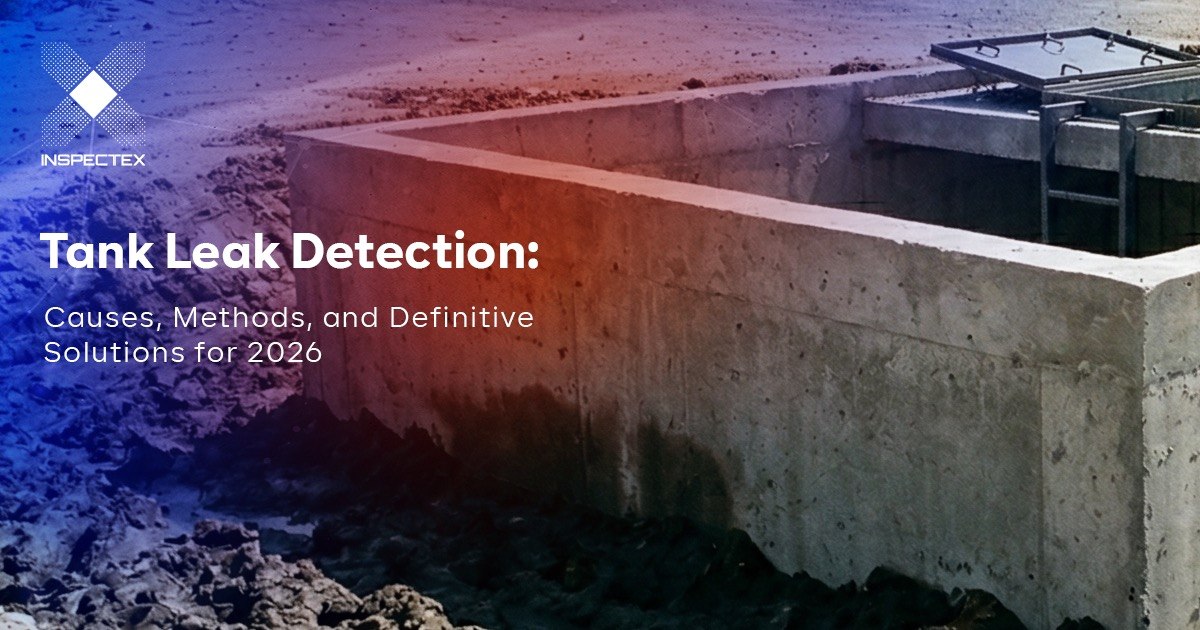
The risk profile changes drastically based on placement. Overhead tank issues are usually spotted quickly through visible ceiling dampness. Conversely, an underground tank leak is a silent threat. It saturates the surrounding soil over months, leading to severe active foundation settlement and the degradation of structural concrete, making early intervention critical.
Causes of Water Leaks in Tanks
When addressing storage tank leak detection, understanding the root engineering causes is the first step toward a permanent solution.
Waterproofing Failure or Deterioration
The primary cause of leaks in concrete tanks is the degradation of the waterproofing membrane. Constant hydrostatic pressure and chemical reactions with chlorine strip the membrane of its elasticity, creating micro-pathways for water to escape into the concrete structure.
Cracks in the Concrete or Fiberglass Structure
Whether constructed from reinforced concrete or molded fiberglass, tanks are vulnerable to structural stress. Concrete tanks may develop hairline cracks due to poor execution or minor soil settlement, while fiberglass units can become brittle due to prolonged UV exposure or physical impacts during installation.
Poor Installation or Improper Fittings
Installing a tank on an uneven or unsupported base creates irregular pressure distribution, inevitably leading to fractures. Furthermore, using substandard pipe connections or failing to secure fittings properly guarantees immediate water loss.
Warning Signs of a Tank Water Leak
Do not wait for a structural collapse to take action. Recognizing the early indicators can save your capital.
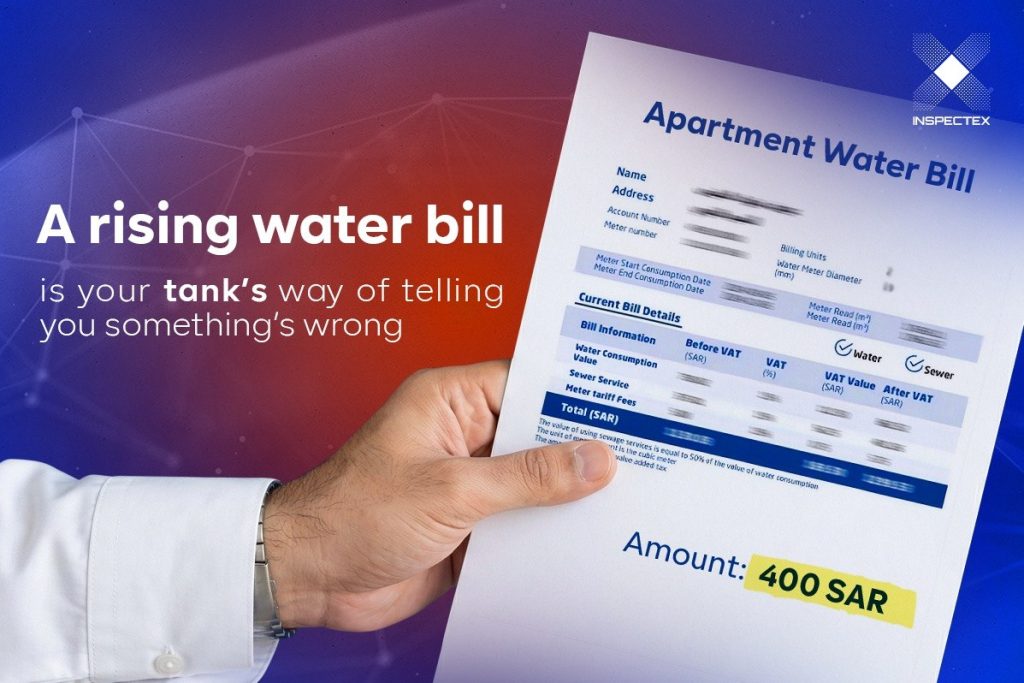
Unexplained Increase in Water Bills
If your monthly water bill surges by 30% or more without a corresponding change in consumption habits, this is the ultimate red flag indicating continuous, high-volume water waste.
Moisture Stains or Damp Patches on Adjacent Walls
Dark moisture patches, peeling paint, or white efflorescence salts forming on the walls adjacent to the tank or in the basement are physical proof of severe water infiltration.
Rapid Water Level Drop Inside the Tank
A simple overnight test can confirm your suspicions. Fill the tank, mark the water level, and ensure all internal plumbing fixtures are closed. A drop of more than 1 to 2 centimeters by morning confirms a massive concealed leak.
Damage Caused by Tank and Wall Water Leaks
Ignoring a leak is not an option when the structural endurance of your property is at stake.
Soil Erosion and Structural Damage
Subsurface water leakage presents a critical structural hazard. It causes the soil beneath your foundations to wash away or shift, leading to severe foundation settlement. Additionally, moisture reaching the steel reinforcement bars causes advanced rebar oxidation (rust), expanding the metal and causing the concrete to spall and crumble.
Mold and Fungal Growth in Affected Areas
The damp, dark environments created by constant leaks are perfect breeding grounds for toxic black mold. These fungal spores compromise indoor air quality, posing severe respiratory hazards to the residents.
Damage to Electrical Systems and Surface Finishes
Water interacting with concealed electrical wiring poses a lethal shock and fire hazard. An engineering audit typically includes checking all GFCI outlets to ensure the electrical system has not been compromised by encroaching moisture.
Modern Technologies for Tank Leak Detection
Leading engineering firms deploy an arsenal of advanced, non-destructive testing (NDT) technologies to ensure precise, data-driven results without unnecessary demolition.
Advanced Acoustic Diagnostics and Sensors
Highly precise electronic listening sensors are utilized to detect the exact hissing frequency of pressurized gas escaping from micro-cracks in the plumbing network, pinpointing the failure without breaking a single tile.
Non-Destructive Thermal Diagnostics
Advanced thermal sensors capture invisible temperature anomalies behind walls and concrete layers. These diagnostics instantly reveal hidden moisture paths by displaying temperature differentials, quantifying the exact water saturation levels.
Targeted Engineering Visual Assessment
While technology is vital, a dedicated mechanical engineer conducts a meticulous evaluation of valves, floats, and all related mechanical components to cross-reference anomalies with the SBC guidelines.
How to Fix Tank Leaks
A professional tank leak detection service is only the first half of the solution; executing the correct remediation is the second.
Patching Cracks and Sealant Applications
For minor, isolated hairline fractures, high-grade polymer sealants and cementitious grouts are applied to bridge the gaps, restoring the tank’s watertight integrity.
Epoxy Injection and Advanced Waterproofing Solutions
For severe structural cracks, high-pressure epoxy injection is utilized. This material bonds aggressively with the concrete, completely sealing the void. Following this, the entire internal surface must be recoated with approved, potable-water-safe waterproofing layers.
Replacing or Renewing Damaged Pipes and Fittings
Deteriorated external plumbing networks must be completely replaced. Engineers ensure all new connections are tightly secured and pressure-tested to prevent recurring failures.
Cost of Tank Leak Detection Services in Saudi Arabia
Astute investors view the cost of storage tank leak detection not as an expense, but as a mandatory preventative investment that protects hundreds of thousands of riyals.
Factors That Influence the Price
The final quotation is directly influenced by concrete technical variables:
- Built-up Area (BUA) and Tank Size: Larger capacities naturally require more time and detailed scanning.
- Property Age: Older structures typically require exhaustive testing of highly degraded mechanical and structural systems.
Comprehensive Inspection vs. Visual (Targeted) Inspection
When evaluating the scope of the service, it is vital to understand the exact engineering solutions provided by Inspectex:
- Comprehensive Inspection: This requires a total audit where our triple engineering team (Civil, Mechanical, and Electrical) evaluates the entire property from top to bottom before you sign the final purchase contract.
- Visual (Targeted) Inspection: This is deployed when a buyer already suspects a specific, isolated failure, such as a dropping water level in the tank. A specialized engineer focuses deeply on this specific mechanical discipline rather than the holistic building envelope.
Preventing Storage Tank Leaks
The best defense against catastrophic structural damage is proactive engineering maintenance.
Periodic Inspection and Regular Maintenance
Apply a preventative maintenance program by scheduling an annual tank leak detection audit. Regularly cleaning the tank removes sludge that can hide micro-cracks and ensures floats and valves operate smoothly.
Using High-Quality Waterproofing Materials
When constructing or renovating, insist on premium, certified waterproofing materials. This initial investment drastically extends the lifecycle of your mechanical systems.
FAQs: Storage Tank Leak Detection
What Is the Best Leak Detection?
The most effective method combines non-destructive thermal diagnostics and advanced acoustic sensors, operated by a certified mechanical engineer, to ensure zero unnecessary demolition.
How Do You Check for Leakage in a Tank?
Engineers utilize precise pressure testing, thermal imaging, and overnight water-level drop measurements to definitively confirm the presence and location of a leak.
How Long Does a Tank Inspection Usually Take?
A targeted assessment for a residential tank typically requires 1 to 3 hours, while a comprehensive property audit takes between 3 to 6 hours of continuous, focused work.
Can a Tank Leak Be the Cause of Wall Dampness?
Yes. Continuous underground leaks saturate the soil and surrounding structures, leading to capillary action where moisture travels up adjacent walls, causing severe efflorescence and dampness.
When Should I Call an Inspection Company for Tank Leak Detection?
You must contact a specialized firm immediately upon noticing an unexplained spike in your water bill, visible dampness, or before finalizing the purchase of a new property.
Secure Your Investment Today
Every day a tank leak remains undetected, your property faces compounding structural stress and escalating repair costs. Protecting your foundation requires more than simply paying inflated water bills; it demands an immediate, precise engineering intervention to halt the deterioration.
Contact Inspectex for expert tank leak detection and comprehensive inspection services available in both Riyadh and Jeddah. Schedule your targeted assessment today with our specialized mechanical engineers, or explore our other engineering guides to learn how our non-destructive technologies can safeguard your entire building envelope from hidden defects.
