Home Inspection Before Buying in Saudi Arabia: Your Guide to a Safe and Confident Purchase Decision
 Inspectex Team
كل المقالات
2026-04-06
Your dream home could be hiding a structural nightmare behind its luxury finishes. In a market where cosmetic flips are common, relying on a standard walkthrough is a high-stakes gamble with your family’s safety and savings. To eliminate this uncertainty, Inspectex provides the definitive engineering criteria for evaluating properties according to the Saudi Building Code (SBC), ensuring your investment is backed by undeniable technical facts.
What is a Pre-Purchase Home Inspection?
To fully appreciate the immense value of this service, it is crucial to define it through a strictly technical lens rather than a commercial one. A surface-level walkthrough by a real estate agent cannot substitute for a meticulous engineering audit.
Defining the Service and Its Core Objectives
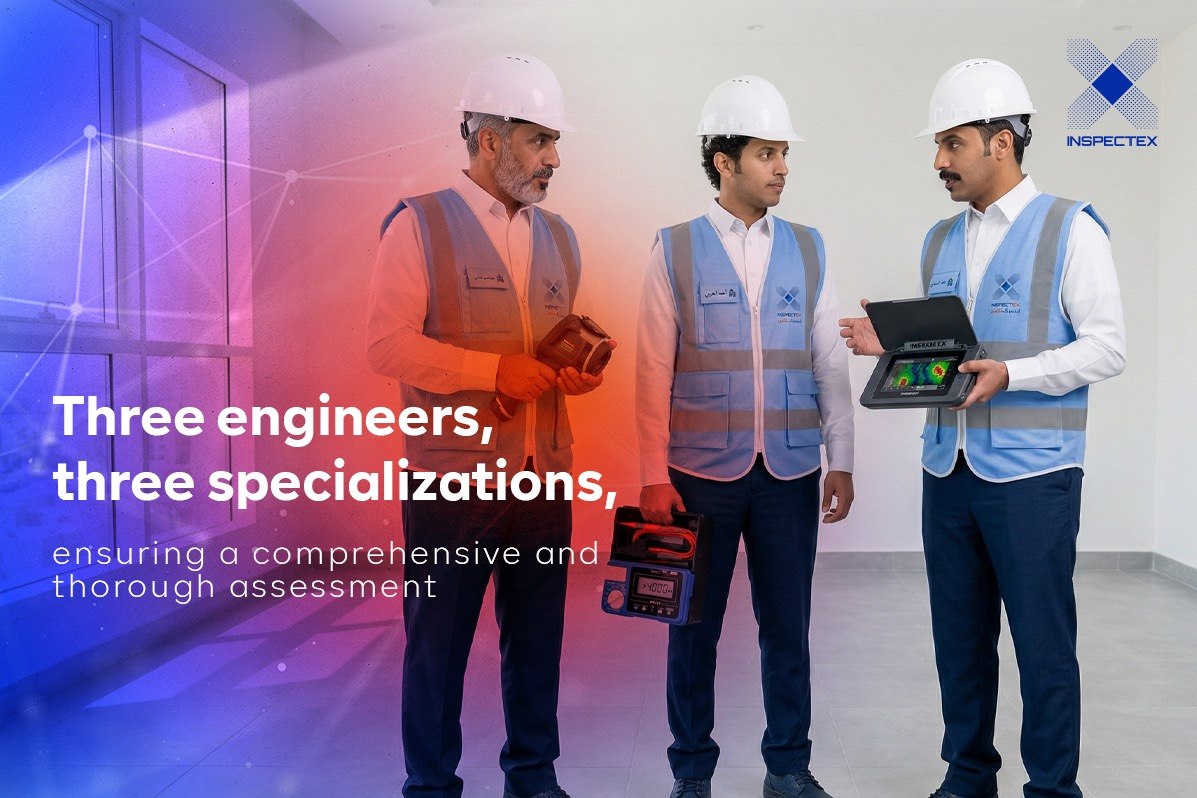
An engineering property assessment is an exhaustive, non-destructive technical audit performed on an existing structure, whether it is a newly constructed villa or a decades-old apartment. Unlike amateur evaluations, top-tier companies execute this process using a specialized triple team methodology.
Our comprehensive approach ensures that every aspect of the property is evaluated by a dedicated expert:
- The Structural/Civil Engineer: Focuses on the building’s skeleton, foundation stability, concrete integrity, and identifying any signs of dangerous settlement or cracking.
- The Mechanical Engineer: Audits the entire plumbing network, HVAC systems (cooling efficiency and duct cleanliness), and the application of waterproofing in wet areas and roofs.
- The Electrical Engineer: Evaluates the main distribution panels, tests load balancing, verifies grounding systems, and ensures all wiring meets strict safety protocols.
Before even setting foot on the site, this multi-disciplinary team engages in rigorous document collection, reviewing available blueprints, as-built drawings, and developer warranties. The primary objective is to generate a comprehensive, data-driven profile of the building’s current operational state, verifying strict compliance with the Saudi Building Code (SBC) and calculating the expected lifecycle of vital mechanical systems.
Why a Home Inspection Before Buying Matters
The true value of an engineering assessment lies in its ability to transform unknown, high-risk variables into clearly defined, manageable data points, effectively protecting your hard-earned capital.
Uncovering Hidden Defects Before Ownership Transfers
Many of the most catastrophic building failures remain entirely invisible to the naked eye during a standard property viewing. Relying on certified home inspections acts as a critical shield against these concealed threats:
- Hidden Moisture and Mold: A freshly painted wall might be masking active, creeping moisture from a leaking internal pipe, which rapidly develops into toxic black mold.
- Waterproofing Failures: High-end porcelain tiles in a bathroom could be concealing a degraded waterproofing membrane, allowing water to silently saturate the concrete slab below.
- Rebar Oxidation (Rust): Within the structural columns, microscopic cracks might be allowing moisture to reach the steel reinforcement bars. As rust expands, it causes the concrete to spall and crumble.
- Electrical Hazards: Poorly insulated wiring or overloaded circuits hidden behind elegant ceilings pose an immediate fire hazard that only an expert can detect.
Avoiding Unexpected Post-Move-In Expenses
Acquiring a property without a prior technical evaluation often means blindly inheriting massive financial liabilities. A meticulously detailed engineering report quantifies these exact risks upfront, saving you from severe financial shocks:
- Roof Replacements: Discovering that a villa requires a complete roof waterproofing overhaul immediately after the first seasonal rain can cost tens of thousands of riyals.
- HVAC Network Failures: Realizing that the entire central air conditioning duct network needs replacement due to heavy mold contamination or severe leaks.
- Plumbing Overhauls: Having to tear down newly purchased luxury tiles to fix a failing central plumbing stack just weeks after moving in.
Confirming the Property Meets Technical Specifications
Aesthetics do not guarantee safety or efficiency. An official engineering assessment verifies that the property’s execution aligns flawlessly with the mandatory technical requirements outlined in the Saudi Building Code (SBC). This compliance guarantees:
- Structural Endurance: Ensuring the building can withstand long-term soil settlement and environmental stresses.
- Optimal Energy Efficiency: Verifying proper thermal insulation in the exterior envelope, which drastically reduces long-term electricity consumption for cooling during harsh Saudi summers.
- Fire and Life Safety: Confirming the correct installation of smoke detectors, fire-rated doors, and safe electrical grounding.
How to Choose the Right House Inspection Company
The real estate market is filled with individuals offering quick visual checks, but the accuracy and legal weight of your final report depend entirely on the operational standards and technical qualifications of the examining entity.
Official Saudi Accreditation and Licensing
The foundational metric for selecting an engineering firm is legal and technical legitimacy. Executing certified home inspections requires strict adherence to national quality frameworks:
- SASO & SAAC Accreditations: A reputable firm must hold active accreditations from the Saudi Standards, Metrology and Quality Organization (SASO) and the Saudi Accreditation Center (SAAC).
- SCE Registration: Every engineer dispatched to the site must hold a valid, active registration with the Saudi Council of Engineers (SCE).
- Code Compliance: The company’s testing methodologies must be strictly rooted in the Saudi Building Code (SBC) guidelines. Engaging with uncertified entities guarantees a report that holds zero technical weight in formal negotiations.
Non-Destructive Equipment: Inspecting Without Breaking Anything
The era of relying on surface-level visual inspections and the naked eye has passed. Leading engineering firms deploy advanced and precise non-destructive testing (NDT) equipment to gather factual data without causing any physical damage to the property. This technological approach ensures that every diagnostic finding is based on undeniable technical evidence rather than superficial assumptions.
Evaluating Previous Work Before Selecting a Firm
Transparency is the ultimate indicator of an engineering firm’s capability. Before choosing your inspection partner, you must demand to review sample technical reports from their previous projects. A professional document that helps you make an informed choice should feature:
- Digital Formatting: Highly structured, easily readable digital layouts that present data clearly.
- Photographic Evidence: Abundantly supported by field photos and infrared thermal scans to prove technical depth.
- Severity Categorization: Clear distinctions between minor cosmetic flaws and critical safety hazards.
- Actionable Recommendations: Precise engineering instructions for remediation and repair.
Steps of a Professional Home Inspection
To guarantee absolute precision and ensure no system is overlooked, Inspectex strictly adheres to a highly systematic, room-by-room field protocol.
Architectural and Structural Evaluation
The diagnostic process commences the moment our triple team of specialized engineers arrives at the property. A comprehensive field survey for an average-sized residential unit requires between 3 and 6 hours of continuous, focused work.
- Architectural Assessment: Our specialized engineer moves room by room to evaluate the finishing quality, such as floor leveling, tile installation, and the alignment of doors and windows.
- Visible Structural Review: The engineer evaluates all visible load-bearing elements, looking for settlement indicators, hairline cracks, or concrete spalling that may indicate underlying issues.
- Facade and Envelope: Scanning facades for cracks and testing window sealing against dust and sound to ensure compliance with the Saudi Building Code (SBC).
Technical System Testing
Following the visual sweep, the engineers transition to rigorous active testing of all critical life-support systems within the building:
- Electrical Auditing: Testing breakers for proper load balancing, checking the integrity of the grounding system, and testing all GFCI outlets in wet areas.
- Mechanical Pressurization: Conducting pressure tests on internal plumbing networks to expose micro-leaks hidden behind tiles.
- Drainage Verification: Strictly measuring the drainage slopes in bathrooms and roofs to ensure water flows perfectly to the floor drains without pooling.
Preparing the Final Engineering Report
The diagnostic process does not end when the engineers leave the site. The raw field data must be translated into actionable intelligence:
- Multi-Stage Internal Review: The raw data is not merely compiled by the field inspector; it undergoes rigorous cross-checking against SBC parameters by dedicated analysis and recommendation teams before final approval.
- Cost Estimation: Approximate repair costs are calculated based on current Saudi market rates.
- Director Approval: The final document is officially approved and stamped by a senior technical director.
- Delivery and Archiving: The client receives a comprehensive technical report delivered in PDF format within 3 to 7 working days. This report provides a detailed estimation of repair costs based on current market rates, and all records are securely archived for a minimum of 10 years.
Cost of House Inspection Services in Saudi Arabia
Astute investors view the cost of an engineering evaluation not as an additional closing fee, but as a mandatory preventative investment that actively protects hundreds of thousands of riyals in capital.
Factors That Influence the Price
Understanding how home inspection prices are calculated helps buyers budget effectively. The final quotation is directly influenced by several concrete technical variables:
- Built-up Area (BUA): Larger properties naturally require more time, manpower, and detailed scanning.
- Property Type: A sprawling multi-story villa with complex smart-home systems demands significantly more effort than a standard single-level apartment.
- Property Age: Older structures typically require more exhaustive testing of degraded mechanical and structural systems.
Comprehensive Inspection vs. Visual (Targeted) Inspection
When evaluating home inspection prices, it is vital to understand the exact scope of the service required to protect your investment:
- Comprehensive Inspection: This requires a total audit where the triple engineering team evaluates the entire newly built asset from top to bottom. The goal is to ensure the developer delivers exactly what was promised in the contract, holding them accountable before the final payment is released.
- Visual (Targeted) Inspection: This is deployed when a buyer already suspects a specific, isolated failure, such as a deteriorating structural column or severe dampness. This targeted approach focuses deeply on one engineering discipline rather than the holistic building envelope.
When Should You Request a Home Inspection?
Timing is a critical strategic element. Requesting an evaluation at the wrong stage of the purchasing journey can negate its financial benefits and complicate legal proceedings.
Immediately Before Signing the Purchase Contract
This is the golden window of opportunity. You must schedule your home inspection after finding the ideal property and agreeing on a preliminary price, but strictly before signing the final legally binding sales contract or transferring the bulk of the funds.
- It provides the ultimate leverage in negotiations.
- It allows you to legally abort the transaction if catastrophic defects are found.
- It ensures you do not inherit the seller’s hidden liabilities.
After Renovation or Maintenance Works Are Completed
If you are purchasing an older property that the seller claims has been recently “fully renovated” or “flipped,” an engineering audit is absolutely critical.
- Exposing Cosmetic Flips: Commercial flips often focus entirely on cosmetic upgrades (fresh paint, new superficial tiles) while ignoring deeply rooted structural decay or aging electrical wiring.
- Verifying Compliance: The technical assessment cuts through the cosmetic facade to verify if the renovation was structurally sound and executed in accordance with SBC standards, or if it is merely a dangerous cover-up.
How a Home Inspection Report Benefits the Buyer
The final technical document is the ultimate equalizer in the real estate market, shifting the balance of power and knowledge firmly into the hands of the buyer.
Making the Purchase Decision with Full Confidence
Instead of enduring the chronic anxiety and hesitation that typically accompany massive real estate investments, a thorough home inspection report replaces fear of the unknown with undeniable, quantified facts.
- You will know the precise technical condition of every building component.
- You will understand the realistic lifespan of its major HVAC and plumbing systems.
- You can sign the final paperwork with complete peace of mind, knowing your capital is placed in a secure asset.
Using the Report as a Price Negotiation Tool
Beyond peace of mind, the technical report acts as an incredibly powerful financial instrument.
- Direct Price Reductions: If the engineers uncover that the property requires immediate corrective repairs, you can use the report’s approximate cost estimates to negotiate a direct reduction in the final asking price.
- Mandatory Seller Repairs: Alternatively, you can legally compel the seller to execute specific repairs to SBC standards before the final handover, ensuring you do not pay for someone else’s deferred maintenance.
Ensuring Safety and Quality of Life for Your Family
While financial protection is paramount, the most profound benefit of investing in an engineering audit is the absolute guarantee of physical safety for your family. By confirming the total absence of life-threatening hazards, such as exposed electrical wiring, improper gas line ventilation, or toxic black mold hidden within the ducts, you ensure that your new residence provides a healthy, secure, and comfortable living environment from day one.
FAQs about Home Inspection
How much does a home inspection cost?
The exact fee varies based on the property’s size, age, and type, but it remains a highly cost-effective fractional investment compared to the massive repair expenses it prevents.
What is the meaning of home inspection?
It is a rigorous, non-destructive engineering audit conducted by a multi-disciplinary team to verify a building’s structural integrity, electromechanical systems, and strict SBC compliance.
Secure Your Investment Today
A property might look flawless on the surface, but only an advanced engineering assessment can reveal its true structural and operational reality. Don’t leave your largest financial investment to chance or guesswork.
Ready to move forward with absolute certainty? Contact Inspectex today to book your comprehensive home inspection. Let our triple team of certified engineers provide you with the undeniable facts, ensuring your new home is as safe, sound, and compliant as you deserve.
